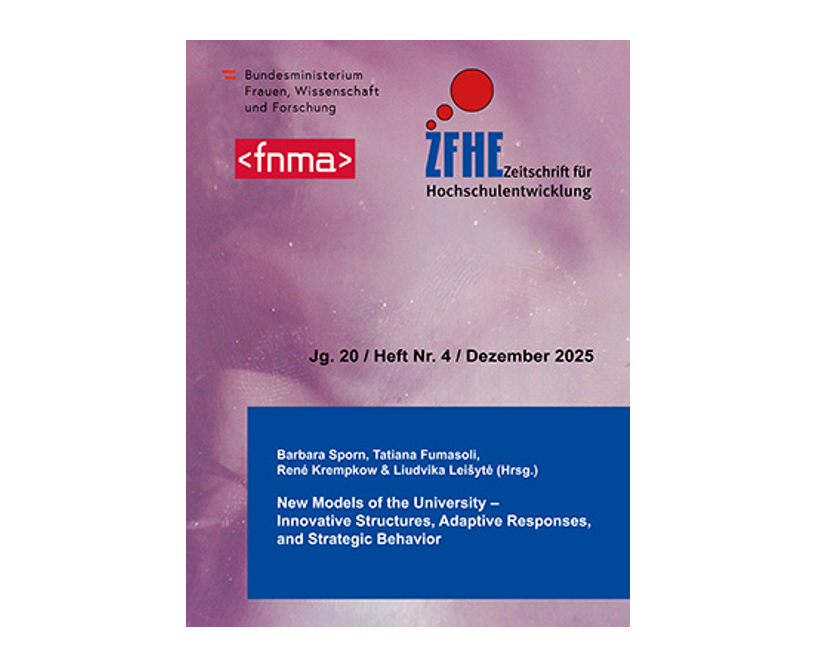


Presentation  Special Issue “New Models of the University – Innovative Structures, Adaptive Responses, and Strategic Behavior”

On February 12, 2026, the editors for the Special Issue „New Models of the University“ of the ZfHE (Zeitschrift für Hochschulentwicklung) hosed an event to present selected contributions. As universities worldwide face unprecedented challenges – from technological disruption to shifting societal expectations and internationalisation – it is crucial to critically reassess the role, structure, and purpose of higher education institutions. This issue of ZFHE brings together contributions that explore evolving institutional models, theoretical perspectives from classical to contemporary scholarship, and the ways universities are adapting to external pressures such as global competition, digitalisation, and changing policy and funding environments.

Verena Régent, Senior Researcher at WPZ Research and coordinator of the Erasmus+-funded CLOUD HED project https://www.cloud-hed.eu/ , presented her co-authored contribution „Continuity and Accessibility in Higher Education Amid Armed Conflict“. Rooted in organisational theory and concepts of disaster resilience, the paper presents three interview-based case studies (Sumy State University in Ukraine, Tel-Hai University in Israel and University of Belgrade in Serbia) of HEIs confronted with ongoing/past conflicts and their crisis adaptation and mitigation strategies. In spite of the geographical and historical differences, common denominators could be found, such as a shift to remote teaching, support through informal networks and the role of the crisis as catalyst for institutional transformation.

CLOUD HED contribution: https://www.zfhe.at/index.php/zfhe/article/view/2207/1651

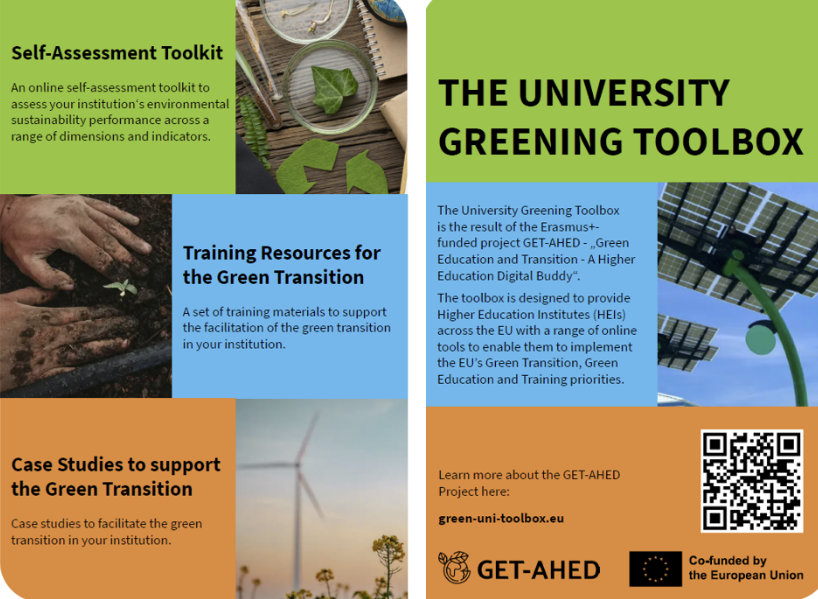
The Green University Toolbox represents the central outcome of the Erasmus+ co-funded project GET-AHED and provides higher education institutions with practical tools, resources, and guidance to advance sustainability, climate action, and institutional transformation. Developed through close cooperation between partners and stakeholders, the Green University Toolbox is designed to support universities and universities of applied sciences in embedding sustainability across governance, teaching, research, and campus operations.

With the launch of the Green University Toolbox, GET-AHED leaves a lasting legacy: an openly accessible, practice-oriented resource supporting higher education institutions across Europe in their green transition.

The University Greening Toolbox is now publicly available at: https://green-uni-toolbox.eu/

The Toolbox provides a structured and accessible framework to support sustainability efforts in higher education institutions. Key components include:

  • The Green Self-Assessment Toolkit to help institutions assess their sustainability performance, identify areas for improvement and receive inspiration for discovering sustainability potential;
  • Green Training Programmes for HEIs, focusing on green governance, institutional strategy and capacity building; and
  • Green Case Studies and examples of practice drawn from European higher education institutions.

The Toolbox can be used independently or as part of broader institutional development processes. It supports evidence-based decision-making and encourages knowledge exchange across institutions.

The Toolbox can be used in many flexible and creative ways across higher education institutions. Some HEIs integrate it into internal strategic development processes, using it to structure discussions on sustainability priorities and long-term goals, while others draw on it as a source of inspiration to strengthen sustainability initiatives across different units. Its whole-university perspective makes it particularly valuable for intra-institutional dialogue, helping to connect sustainability efforts across governance, teaching, research, and campus operations.

Beyond strategy, the Toolbox supports reflection and learning. Institutions can repeat the self-assessment over time to monitor progress and identify areas for improvement. Educators increasingly use the Toolbox in teaching, inviting students to explore its resources or assess their own institution, which often sparks rich discussions about how sustainability is understood and practiced. In this way, the Toolbox not only informs institutional change but also encourages critical reflection on the sustainability of projects, policies, and everyday practices within higher education.

Watch the webinar on the University Greening Toolbox: https://youtu.be/QQnkVdXIoNw

Die Hochschulstrategie 2040 ist zentral für Österreichs Wettbewerbsfähigkeit. Wir brauchen Hochschulen mit einer klugen Gesamtsteuerung und mit modernen Studien‑ & Weiterbildungsangeboten, die den Fachkräftemangel – vor allem im MINT – spürbar reduzieren.

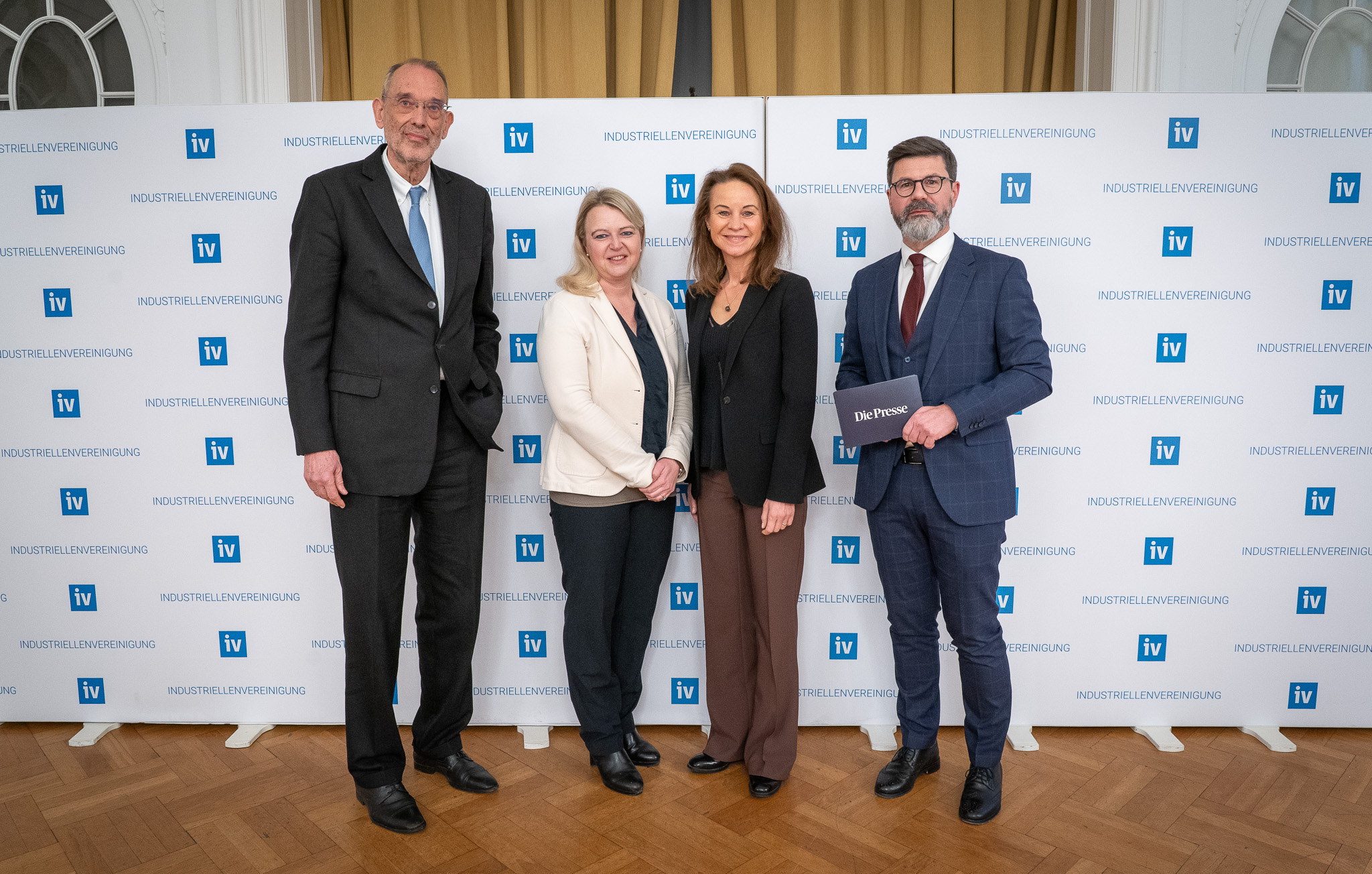
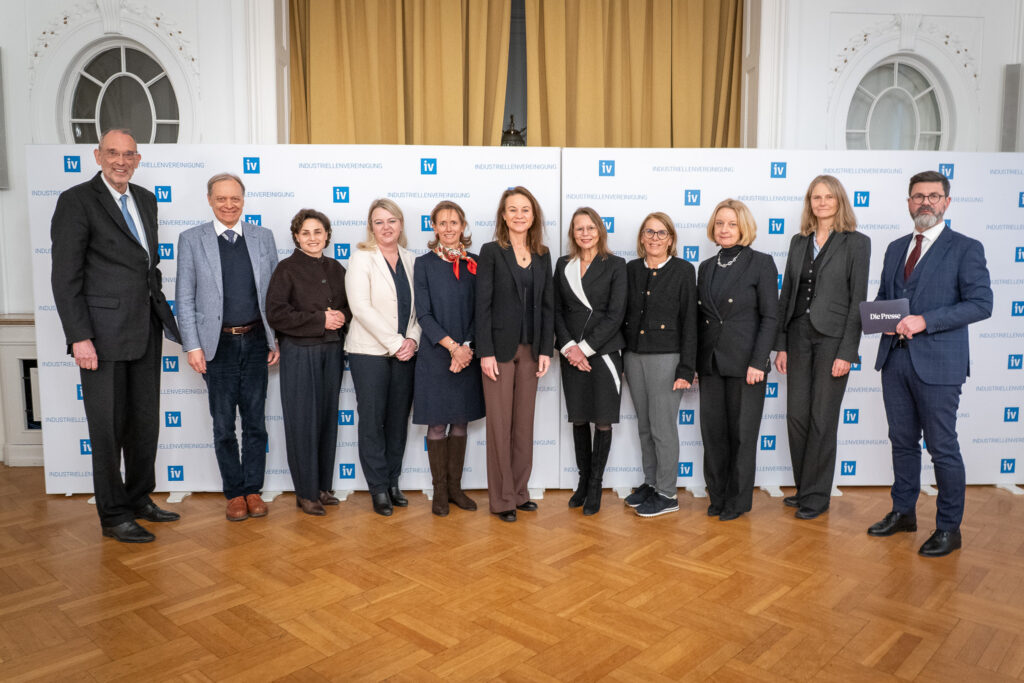
Brigitte Ecker präsentierte in der Veranstaltung am 16. Jänner 2026, die im Festsaal der Industriellenvereinigung stattfand, die Potenziale in der Hochschulentwicklung und die für das österreichische Hochschulsystem notwendigen Veränderungen.